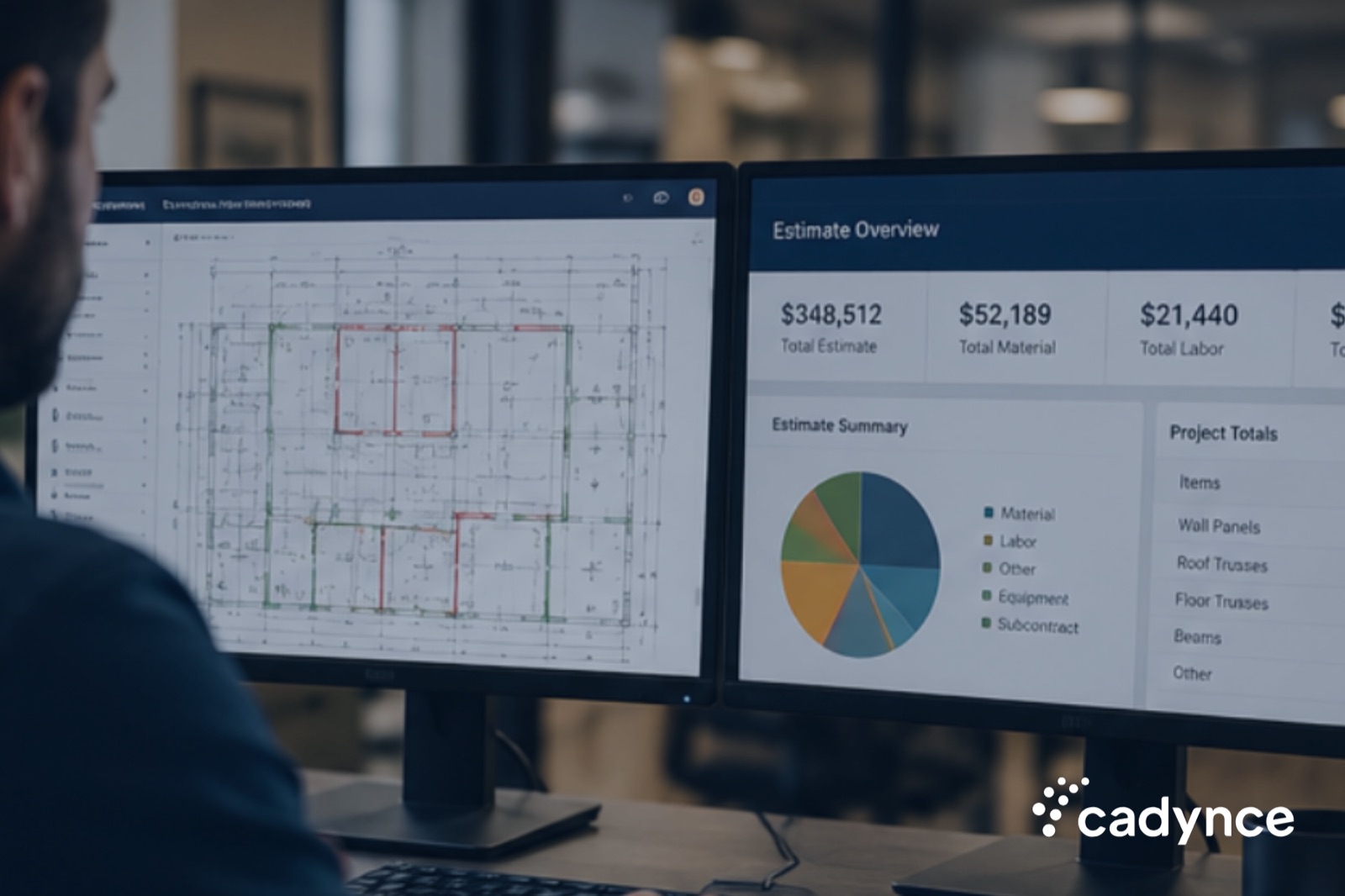
Part 1: When Faster Estimating Creates a New Bottleneck
AI-assisted estimating is changing how component manufacturers approach the bid process.
By reducing repetitive plan review and helping estimators work more efficiently, teams have the opportunity to increase estimating capacity without simply adding more hours to the day.
That sounds like a clear win. And it is.
But there’s another side to faster estimating that’s worth thinking about.
What happens when more bids start moving through the rest of your operation?
Faster Estimating Changes What Comes Next
For many component manufacturers, estimating has traditionally been a major constraint. There are only so many plans an estimating team can review and only so many bids they can turn around.
AI-assisted estimating can help remove some of that pressure.
But when estimating speeds up, everything that follows has to be ready for the additional volume.
More estimates mean more bids to submit and track. More bids can mean more awarded jobs. And those jobs still need to move through design, approvals, scheduling, production, and delivery.
If those steps still rely heavily on spreadsheets, emails, whiteboards, or manual updates, improving estimating speed may reveal a different problem.
The bottleneck didn’t disappear. It moved.
More Bids Can Mean More to Keep Track Of
Think about how many questions come up after an estimate is completed.
Was the bid submitted?
Has the customer responded?
Did we win the job?
Who is responsible for the next step?
Is the project waiting on an approval?
Where does it stand right now?
When your team is managing a handful of opportunities, finding those answers may not feel difficult.
As bid volume grows, it becomes much harder.
If answering a simple status question means checking a spreadsheet, searching through email, looking at a whiteboard, or asking someone for an update, the efficiency gained during estimating can quickly be lost somewhere else.
Speed Is Only Part of the Equation
The goal of AI-assisted estimating shouldn’t simply be to produce estimates faster.
It should give experienced estimators better tools to handle more opportunities while continuing to apply the knowledge and judgment they bring to every project.
But increasing estimating capacity affects more than the estimating department.
It puts more work into the processes that come next.
That makes it important to look beyond estimating and ask whether the rest of the operation is prepared to handle that growth.
The Bottom Line
AI-assisted estimating creates an opportunity for component manufacturers to increase capacity and pursue more work.
But faster estimating alone doesn’t create a more efficient operation.
If the processes surrounding estimating remain disconnected, increased speed can expose new bottlenecks, create more follow-up, and make visibility even more important.
So as manufacturers think about what AI-assisted estimating can do for their business, there’s another question worth asking:
If we can estimate more work, are we ready to manage everything that comes next?
In Part 2, we’ll look at what happens after the estimate and how a connected workflow can help teams keep work moving from bid to build.