Traditional Estimating Can’t Keep Up With Modern Construction Data
By Kenneth Sewell ·
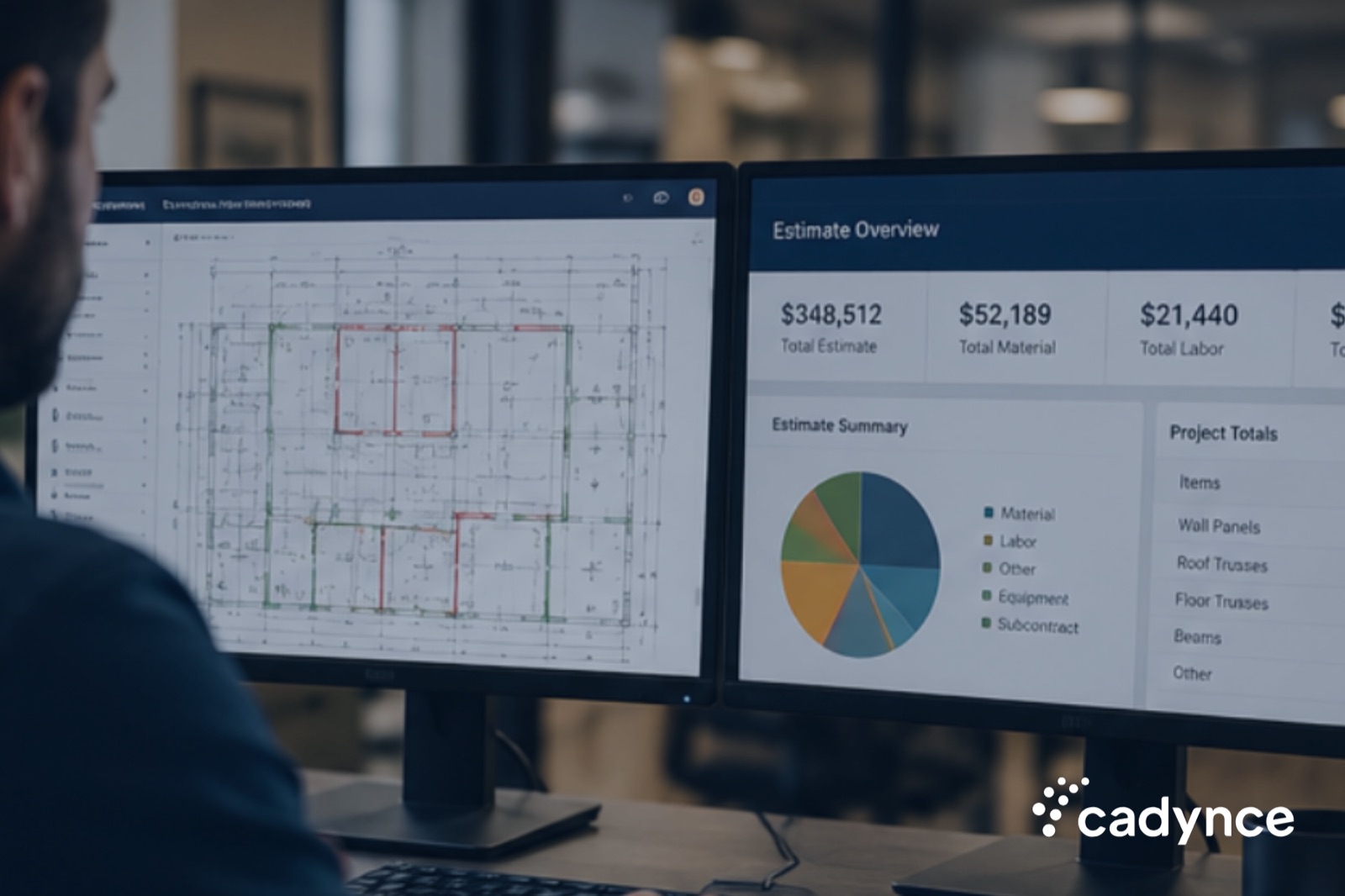
Construction estimating has changed dramatically over the last decade.
Projects move faster. Plan sets are larger. Revisions happen constantly. Teams are expected to bid more work in less time while still maintaining accuracy and visibility across the business.
But while construction has evolved, many estimating processes still rely on tools that were never designed for the amount of information modern projects now generate.
Spreadsheets. Shared drives. Email threads. Manual takeoffs. Disconnected systems.
The volume of project data has exploded, but the systems managing it often have not evolved at the same pace.
Construction Projects Generate More Complexity Than Ever Before
Every project now carries an enormous amount of information tied to it.
Plan sets continue to grow larger. Revisions move faster. Material pricing changes more frequently. Teams need visibility into workloads, timelines, approvals, and production capacity all at once.
For component manufacturers, this becomes even more challenging.
A single estimate may involve hundreds of pages of drawings, multiple revisions, changing loads, customer communication, engineering notes, and coordination between estimating, design, sales, and production teams.
The challenge is no longer just creating an estimate.
The real challenge is organizing and managing the information surrounding that estimate.
Traditional Estimating Tools Were Built Around Manual Processes
Most traditional estimating systems were built around a much simpler workflow.
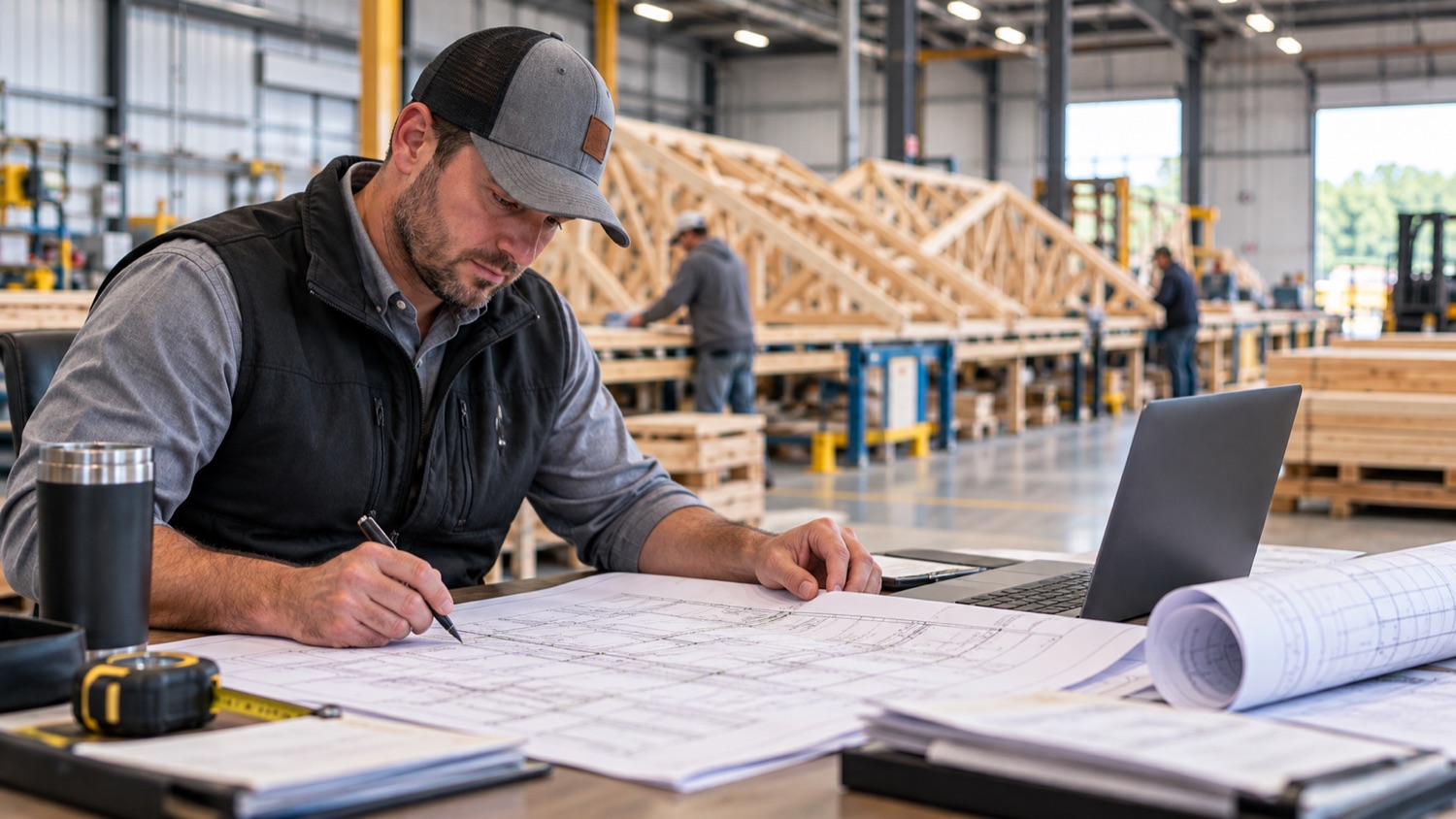
An estimator manually reviewed plans, gathered information, entered quantities into spreadsheets or software, and produced a bid.
That process worked when projects were smaller and teams handled less volume.
But modern construction workflows no longer operate that way.
Today, estimators are expected to process significantly more information in significantly less time. Yet many businesses are still managing their estimating process with disconnected tools that create visibility gaps and operational bottlenecks.
As bid volume increases, these issues become harder to ignore.
Teams spend valuable time searching for updated files, tracking revisions, following up on status updates, and manually coordinating between departments. Information becomes scattered across spreadsheets, emails, PDFs, and different software systems.
The problem is not that teams are working inefficiently.
The problem is that many estimating systems were never designed to handle the speed and complexity of modern construction data.
AI Is Beginning To Change Estimating
AI estimating is starting to reshape what is possible.
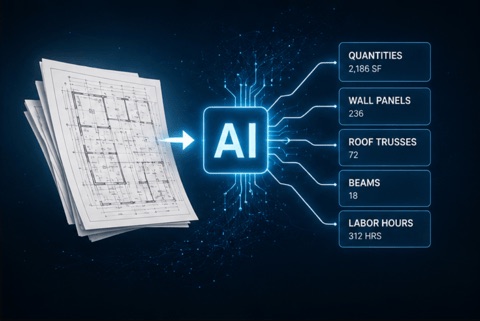
Modern AI systems can now analyze plan sets, extract information, identify quantities, and help estimators process projects dramatically faster than before.
What once took days can now happen in minutes.
This is a major shift for the industry.
But faster estimating alone does not solve the larger operational problem.
In many cases, AI actually exposes weaknesses that already existed inside the workflow.
When estimates move faster but the surrounding process remains disconnected, teams can quickly become overwhelmed by revisions, communication gaps, unclear ownership, and downstream bottlenecks.
This is why AI estimating cannot simply exist as another standalone tool.
It needs to operate inside a structured workflow process that provides visibility and accountability across the business.
The Future of Estimating Is Connected Workflows
The companies seeing the most success with AI are not simply adding AI onto outdated processes.
They are building structured systems around how work moves through the organization.
That includes:
- Defined workflow stages
- Clear ownership
- Organized project data
- Visibility across departments
- Connected estimating and operational processes
The goal is not just faster estimating.
The goal is creating a system where information can move clearly from bid to build without getting lost between departments.
For component manufacturers, this matters because estimating affects far more than just the sales process. It impacts design workloads, production scheduling, material planning, delivery timelines, and overall operational visibility.
When estimating systems lack structure, the effects ripple throughout the business.
But when estimating data is connected to workflows, teams gain greater visibility, clearer accountability, and a far more scalable process.
Final Thoughts
Construction is generating more data than ever before.
Traditional estimating systems were not built for this level of complexity, speed, or coordination.
AI is helping teams process information faster, but speed alone is not enough.
The future of estimating will belong to companies that combine AI with structured workflows, connected data, and real-time operational visibility.
Try Cadynce’s Free AI Construction Plan Analysis Tool
Want to see what AI estimating looks like in practice?
Cadynce’s free AI tool allows you to upload construction plans and instantly analyze project information using AI.
It is a simple way to explore how AI can help estimators process plan data faster while reducing manual review time.
Whether you are just starting to explore AI or evaluating how it could fit into your estimating workflow, this is a great place to begin.
Try the free tool here: Cadynce AI Tool