
How Old Is the Technology Running Your Business?
By Kenneth Sewell ·

Most component manufacturers evaluate management software based on features, familiarity, or cost. But there’s another question that’s becoming increasingly important:
How old is the technology running the software your business depends on every day?
For many manufacturers, the answer may be surprising.
Several long-established management platforms in the building component industry trace their origins back more than two decades. While they’ve continued to receive updates over the years, many were originally built using technologies that predate smartphones, cloud computing, modern web applications, and AI.
The software may still accomplish its job, but the technology underneath it can have a significant impact on how quickly it evolves.
A Look Back in Time
When many management platforms in the industry were first introduced…
- Google was just getting started.
- DVDs were replacing VHS tapes.
- Dial-up internet was still common.
- The first iPhone was still years away.
- Facebook didn’t exist.
- Microsoft was promoting Classic ASP for web application development.
The expectations for business software were very different.
Software was designed primarily for desktop users working inside a single office. Mobile access, cloud infrastructure, APIs, real-time collaboration, and artificial intelligence simply weren’t priorities yet.
Why Your Technology Stack Matters
The technology stack behind your management software influences far more than what users see on the screen.
It affects:
- How quickly new features can be developed
- How secure the platform is
- How easily it integrates with other software
- Performance and reliability
- Mobile responsiveness
- Scalability
- Long-term support
- Readiness for AI and automation
While features are important, the technology underneath determines how quickly those features can continue improving.
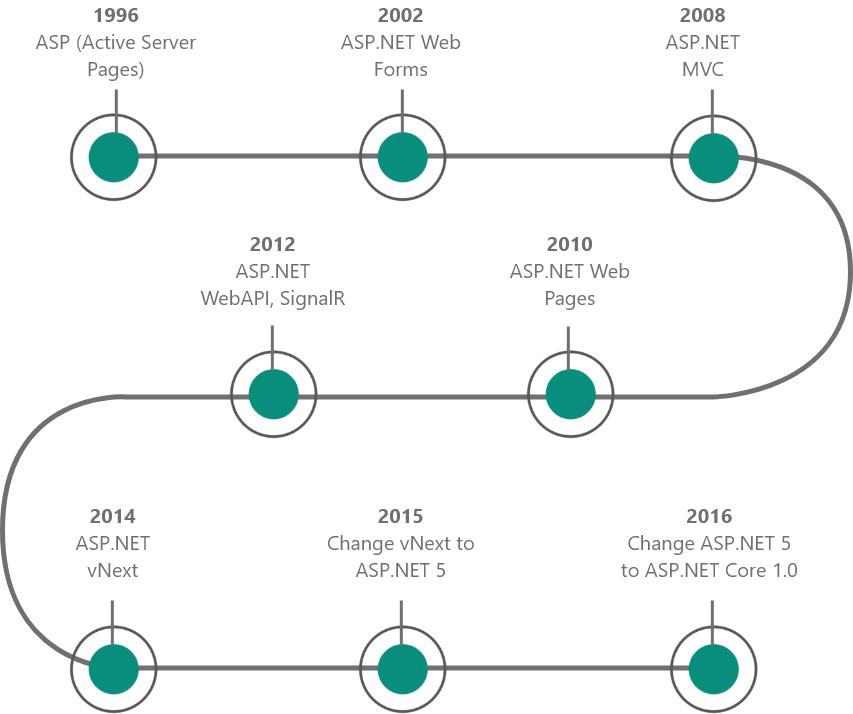
From Classic ASP to Modern .NET
Many web applications developed in the late 1990s and early 2000s were built using Classic ASP, Microsoft’s original web application framework.
At the time, it was a major advancement.
However, Microsoft introduced ASP.NET in 2002 as its successor, bringing compiled code, stronger security, improved performance, and a more scalable architecture. Since then, the platform has continued to evolve into today’s ASP.NET Core, which Microsoft actively develops and releases new versions of every year.
Modern .NET provides advantages that simply weren’t possible when earlier web frameworks were introduced, including:
- High-performance compiled applications
- Modern authentication and security features
- REST APIs for integrations
- Cloud-native deployment
- Cross-platform support
- Better scalability
- Faster development cycles
- Ongoing Microsoft investment and support
Technology doesn’t stand still, and neither should the software manufacturers rely on every day.
Built on a Modern Foundation
Cadynce was built using a modern technology stack designed for today’s manufacturing environment.
Our platform is built on:
ASP.NET Core
A modern, high-performance framework actively developed by Microsoft that powers enterprise applications around the world.
Angular
A modern single-page application framework that delivers a fast, responsive, app-like experience across desktop and mobile devices.
Entity Framework Core
A modern object-relational mapper (ORM) that provides secure, maintainable, and efficient database access while helping accelerate new feature development.
REST APIs
Cadynce is designed with APIs at its core, making integrations with design software, business systems, reporting tools, and future technologies significantly easier.
Cloud-Ready Architecture
Our platform is designed to scale, receive continuous updates, and support customers without relying on outdated infrastructure.
Why This Matters for Component Manufacturers
Technology isn’t just about performance benchmarks.
It determines how quickly your software vendor can respond to your needs.
When your team requests:
- A new workflow
- A new integration
- Better reporting
- AI-powered capabilities
- Mobile improvements
A modern platform makes those improvements faster, safer, and easier to deliver.
Instead of spending development time maintaining decades-old architecture, more effort can be invested in delivering meaningful innovation.
Looking Ahead
The component manufacturing industry is entering a new era.
AI is changing estimating.
Automation is reshaping workflows.
Customers expect faster turnaround times and greater visibility.
The management platform running your business should be ready for that future.
The question isn’t simply whether your software still works.
It’s whether the technology behind it was built for where your business is going next.
Curious About How Your Current Platform Compares?
Every component manufacturer’s workflow is different. That’s why we offer a complimentary bid process assessment.
During the session, we’ll:
- Review your current management process
- Identify workflow bottlenecks
- Discuss opportunities to improve visibility
- Answer your questions about modern management platforms
Whether you’re considering a change today or planning for the future, you’ll leave with actionable insights.
Book Your Free Bid Process Assessment